

Support Coordination

When searching for Supported Independent Living (SIL) or Specialist Disability Accommodation (SDA), many providers appear identical at first glance. Polished photos, reassuring language, and claims of quality care are everywhere.
But SIL and SDA provider quality can’t be judged from a listing alone.
Here are five practical ways to assess the real quality of a SIL or SDA provider.
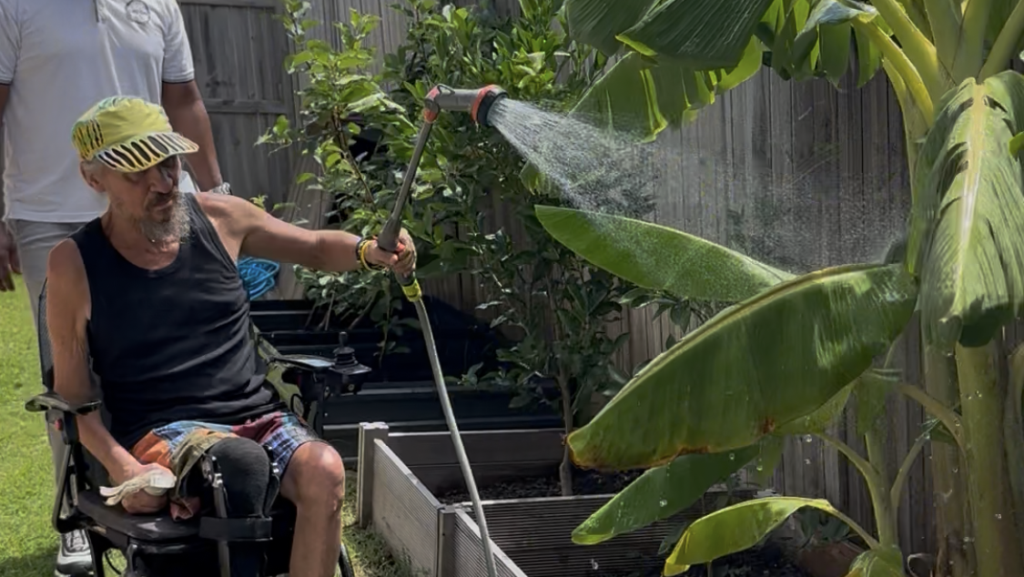
‘B’s Garden at one of our SIL homes
One of the first things to look at is how costs are structured, particularly whether the provider offers fixed weekly support and rental rates.
There are situations where fixed weekly support rates aren’t appropriate or feasible, particularly when a participant’s needs are highly variable, however, predictability matters more than people realise.
When costs fluctuate week to week:
Fixed weekly rates allow:
SIL and SDA should support independence and security – not create ongoing financial uncertainty. Transparent pricing is often one of the clearest indicators that a provider is thinking long-term.
All LME SIL & SDA homes have fixed rental rates
Many homes look impressive in photos. But livability is rarely felt through photos.
Livability is about:
A house can be new, modern and SDA registered – and still feel uncomfortable to live in.
When possible:
The goal isn’t accommodation – it’s a sense of home, a base to live, grow and learn from.
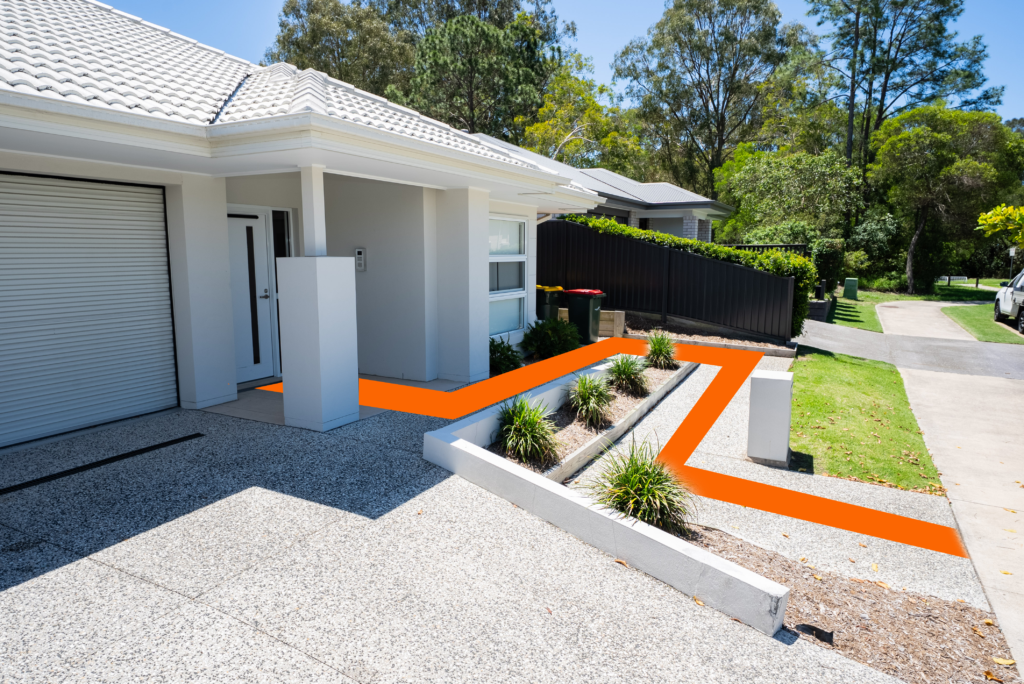
A common misconception is that if a home is SDA or SIL registered, it automatically is accessible and suitable.
In reality, registration only confirms that a home meets certain design standards. Not that it works for a specific person.
You don’t want to have a participant in a home that technically met criteria, yet is functionally unsafe or undignified for their needs.
When assessing accessibility, look beyond labels and check yourself:
Accessibility should support dignity, independence, safety and capacity to provide necessary care, not just compliance.
Take a look at a tour of a purpose-bult home.
Our available purpose-built homes:
Rothwell (SDA)
Pallara (SDA)
They way a provider communicates during the enquiry and intake phase is often a preview of how they’ll communicate when challenges arise.
Pay attention to:
A rigorous intake process isn’t a red flag – it’s a green one. It shows the provider is focused on:
Providers who rush intake often struggle later with misalignment, stress, and reactive support.
Support work is built on relationships – and relationships require consistency.
One of the most reliable ways to assess care quality is to gently investigate staff stability.
When visiting a home, it’s reasonable to ask:
High staff turnover often leads to:
Stable teams usually reflect:
Consistency isn’t a “soft” detail – it’s fundamental to good care.
True quality in SIL and SDA isn’t found in marketing language or polished listings. It’s found in:
These elements protect not just a participant’s plan – but their growth, wellbeing, dignity, and sense of safety. This creates a stable base for someone to live their best life – focusing on their goals, adventures to be had and progress to be made.
If you’re currently exploring supported living options, we regularly share insights, walkthroughs, and availability updates – and we do have current vacancies that reflect the standards outlined above.
→ Explore our current SIL and SDA listings
→ Learn more about our approach to quality supported living
